I like to try things I haven’t done before and, on Thursday I decided to make a serious attempt at learning some video editing skills. It’s still a work in progress because, as one of my professors in graduate school once said, “Everything takes longer than it does.” 9999 more videos and I’ll be an expert.
Meanwhile, Season 5, Episode 13 will be out tomorrow. In the meantime please enjoy this preview.
It’s been a while since we’ve done an installment of “Foundational Readings” or of “Next Time on Stars End.” I used those two columns to share the art that originally accompanied the stories we were reading. There’s a bit of unfinished business there, but today we have a bit of a surprise.
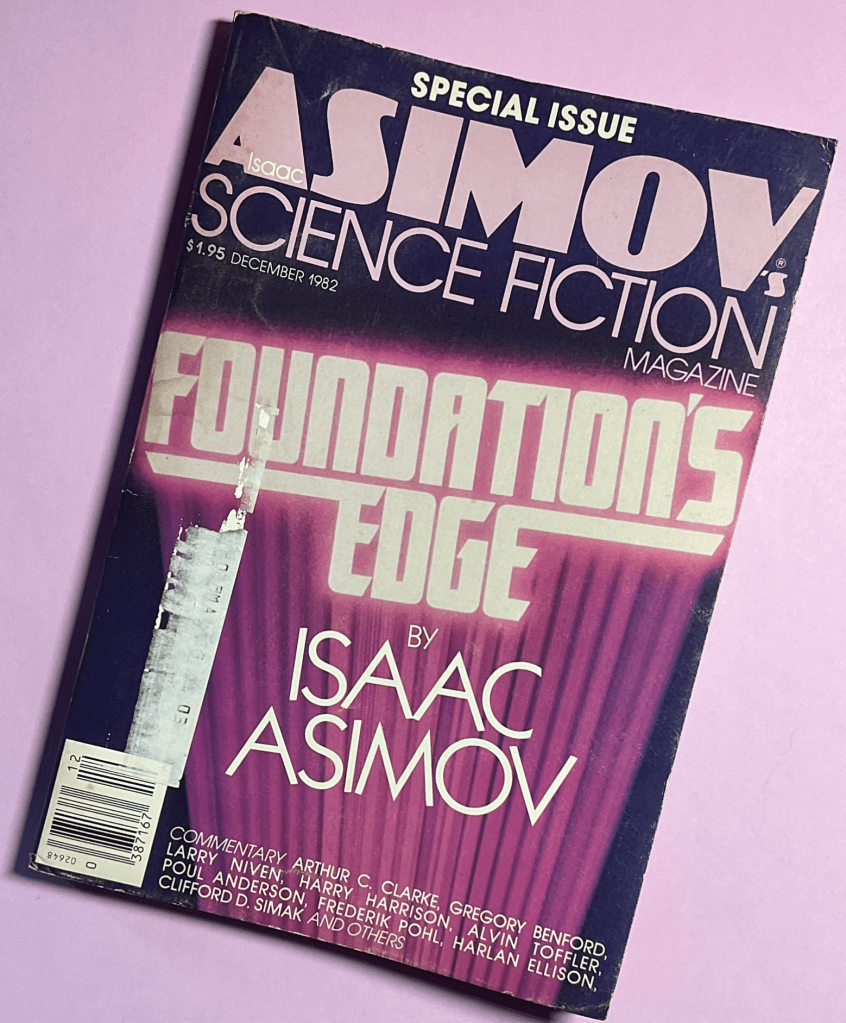
I remember what a big deal this was: the first Foundation novel in thirty-two years! But here’s something I didn’t remember or, more likely, wasn’t aware of at the time. Unsurprisingly, Asimov’s Science Fiction Magazine thought it was a pretty big deal too. So much so that the centerpiece of their December 1982 issue is the first two chapters excerpted from the book.
On Saturday, we’ll release Stars End, Season 5, Episode 5. It’s our last installment about Foundation’s Edge; we’ve reached Gaia and the book’s climax.
But there’s lots more! There are two additional pieces of writing by the Great and Glorious Az himself, an editorial entitled “Susan Calvin” and a short essay entitled “The Story Behind the Foundation” under the masthead “Viewpoint.” I’ve read the latter before, although maybe not all at once; it is repurposed in an abbreviated form as a foreword (with the same title) to Foundation and Earth. The editorial, though, was new to me; I’ve never seen it anywhere else.
There are also commentaries from some of the biggest names in Science Fiction lauding the advent of a new Foundation novel, including Arthur C. Clarke, Harlan Ellison, and Larry Niven. Those alone were worth tracking down a copy. Here’s a sample.
But of course, the main attraction here is the artwork: like the novel, these are the first Foundation illustrations in decades. Unlike the novel, these were not all that available in the subsequent forty-one years.
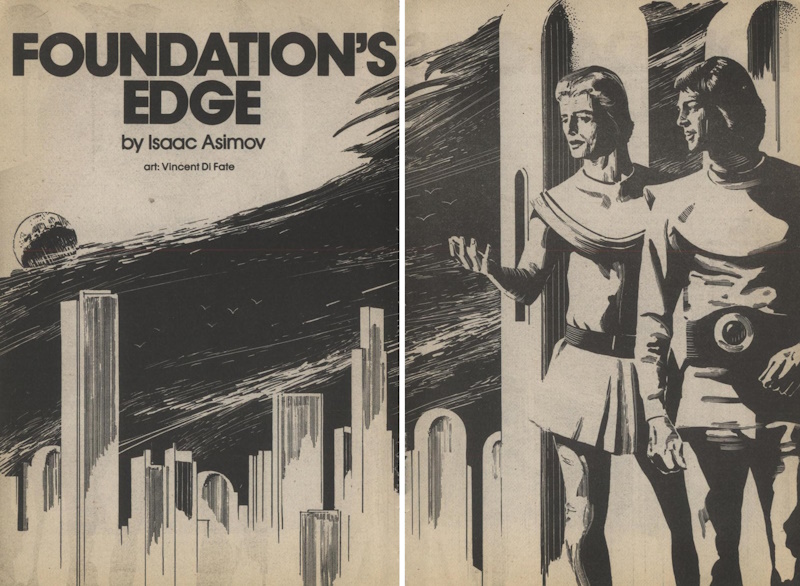
There are three nice images drawn by Vincent Di Fate. The first is the opening two-page spread of the excerpt.
The other two take up an entire page of the magazine each.
Two additional images reuse elements of images 2 and 3 above. This is lovely stuff, and as I’ve said on our companion site, JosephFranké.com, great art deserves to be seen.
You can find out about Asimov’s Science Fiction Magazine online at www.asimovs.com. I scored my copy on eBay for a reasonable price.
Did you know that when Elements are named to honor cities the Latin names for the cities are used rather than the common names? The funny thing is that this is true even if the city has no Latin name. This is how we get the name for holmium, which is named after Stockholm or rather after “Holmia” which is the Latin name for Stockholm that the chemist made up.
This is from the essay “Names! Names! Names!” by the good doctor. It’s all about naming elements and, although I haven’t quite finished it yet, I’m pretty sure it covers all hundred or so that were known at the time.
If you’re curious, here are the names of the other elements
The essay appeared in the December 1956 issue of Astounding Science Fiction, the very same issue as our final installment of The Naked Sun. This led John W. Campbell to declare Asimov a “two-headed author.” Isaac’s predilection for non-fiction was starting to show.
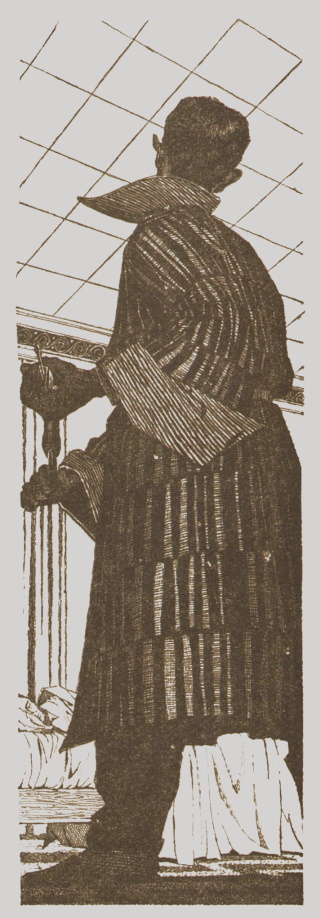
Being trained as a chemist, Asimov gives us a ton of Asenion names to enjoy in this final section! There’s GlaDIEah Delmarre, Klorissa Cantero, Jothan Leebig, Corwin Attlebish, and Anselmo Quemot. And who could forget Benzadril Copperbottom? In this final section, which corresponds to chapters 13 to 18 in the book, Baley survives the assassination attempt, gets his portrait done, almost strolls to his death, and solves the case! Of course, we talk about it all. Join us for the setting of The Naked Sun!
That corresponds to chapters 7 through 12 in the book.
There’s less hype this time except for the presence of part one in the October issue; Part two was not mentioned in Campbell’s Things to Come and wasn’t on the issue’s cover. Who is James H. Schmitz by the way? I don’t know!
But that doesn’t mean that nothing happened in this installment!
We see the aftermath of the assassination attempt of Hannis Gruer and learn what constitutes “sociology” on Solaria. We meet Gruer’s stand-in as Head of Security and watch as Baley gets to go walkabout across the planet. We also learn an uncomfortable amount about Solarian childrearing and witness a second, seemingly impossible assassination attempt on this world so filled with three-laws robots!
Here’s John W. Campbell’s blurb that precedes this installment!
Second of Three Parts. Lije Baley was investigating a murder. Usually, an alibi proves physical impossibility; on robot-dominated Solaria, a different question arose. Is a robot’s conditioning “physical” or “psychological” impossibility? And is there any such thing as “psychological impossibility”? And if it exists for robots, does it for humans…?
Astounding Science Fiction November 1956
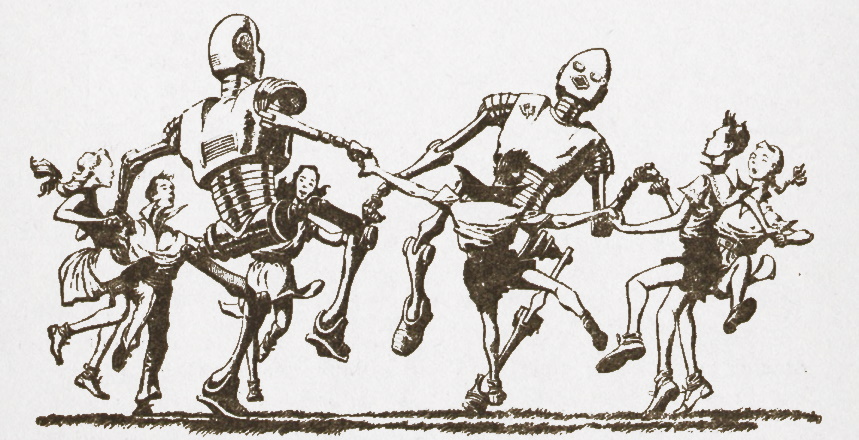
The illustrations this time are again by H. R. Van Dongen.
The available scans were not great, but I cleaned up the images as much as possible. If I keep this up, I may need to learn a lot more about that process.
Season 3, Episode 19: coming soon to anywhere the finest podcasts are sold!
Resources
Asimov, Isaac. “The Naked Sun, part 2” Astounding Science Fiction, November 1956, pp. 96-151.
Some things can’t be seen. If you’ve listened to our podcast, you know that we’ve bemoaned the fact that although there was a BBC adaptation of The Caves of Steel, we cannot see it because all known copies of the original tapes have been destroyed.
Did you know that there was also a BBC adaptation of The Naked Sun? It came out in the third season of Out Of The Unknown and starred Paul Maxwell as Elijah Baley and David Collings as R. Daneel. We can’t see that either. You’d think that the BBC would have learned its lesson by 1969, but no such luck. All known copies of those tapes have been destroyed as well.
And then there’s Joseph’s friend Andy, our special guest in this episode. He has studiously avoided having a social media presence and so he’s something else that can’t be seen, online anyway.
Paul Maxwell as Elijah Baley
In The Naked Sun, we learn all about things that can’t be seen. Lije wants to see the crime scene and he wants to see the outside and he especially wants to see Gladia but the Solarians are determined that he only view these things. Seeing is not the same as viewing.
But sometimes we can hear even if we can’t see. That episode of Out Of The Unknown? There’s a reconstruction, so the soundtrack must still exist. You can hear that if you can find a copy.
“Andy” artist’s rendition.
You can hear Andy here on the podcast, in his World Wide Web premier.
And you can hear about chapters 1 through 6 of The Naked Sun because that’s what we’re talking about this time. We’ll get to that viewing vs. seeing thing and much more!
In our last episode, we reached the end of The Caves of Steel. In our next episode, now in post-production, we continue our trip through the Robot Novels with The Naked Sun. We’re joined as our latest special guest by Joseph’s old friend Andy who has no discernable social media presence.
Asimov serialized The Caves of Steel in Galaxy Science Fiction because the editor, Horace Gold, suggested the idea of a human detective with a robot partner.
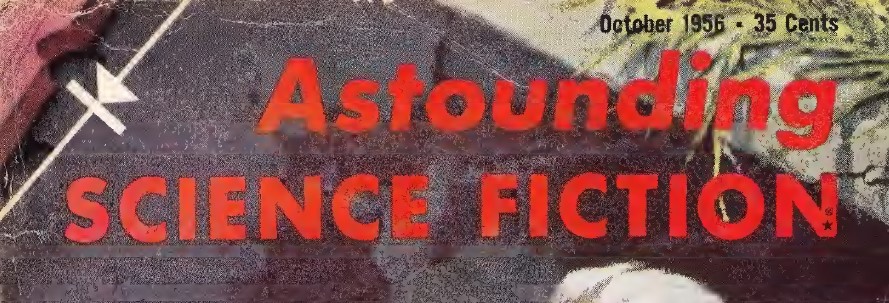
But three years later Asimov was increasingly interested in writing popular science and hadn’t published anything with John W. Campbell in a while. He decided to return to his roots and The Naked Sun was serialized in Astounding.
And Campbell did his best to capitalize on the famous author’s return. The month before its first segment ran The Naked Sun dominated Campbell’s “In Times to Come” column which highlighted coming attractions. Here’s what he had to say.
On the cover of next month’s issue, you’ll see Mr. Lije Baley, Earthman detective, coming out from underground into the light of The Naked Sun. Isaac Asimov’s new serial is bringing Elijah Baley and his robot partner, Daneel, on another detecting mission. But while the surface activity is that of determining who killed a man when it was self-evidently impossible, the real and important problem Baley has to solve is far more complex. Essentially, it is… “Which Way Is UP? Which way is forward?”
And this time, the problem lies on one of the Outer Planets; agoraphobic Elijah Baley has to solve a problem under the conditions least endurable to him — out under The Naked Sun
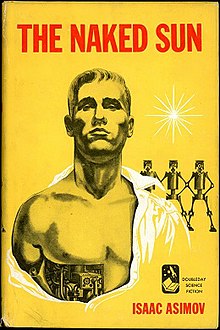
In this section, Baley is assigned to a murder case on Solaria, the newest of the Spacer worlds. He’s reunited with R. Daneel and we see him struggling with his agoraphobia in planes, spaceships, automobiles, and also in a big fancy house built just for him. We also learn about the murder and meet Gladia (pronounced gla-DEE-ah) Delmarre who is destined to become a major character and helps put the naked in The Naked Sun.
Here are the opening pages and the remaining illustrations by H. R. Van Dongen.
Season 3, Episode 17: coming soon to the aether near you!
Resources
Asimov, Isaac. “The Naked Sun, part 1” Astounding Science Fiction, October 1956, pp. 8-62.
If you follow our podcast you know that we’ve discussed Asimov’s reluctance to rewrite stuff many times. Even more frequently we’ve discussed… let’s call it the Great and Glorious Az’s ability to write female characters. We’ve speculated that, after attending Boys High School in Brooklyn, Seth Low Junior College, and Columbia University, neither of which were co-educational, it’s possible that Asimov simply hadn’t spent time with many women. Aside, of course, from his mother and sister.
The Robot Chronicles
We were therefore intrigued by the following quote from “The Robot Chronicles” as published in Asimov’s Gold: the Final Science Fiction Collection. At this point in the essay, Asimov writes about his individual Robot stories and what made them significant. Here’s what he had to say about “Liar!”
In the very next issue of Astounding, that of May 1941, my third robot story, “Liar!” appeared. The importance of this story was that it introduced Susan Calvin, who became the central character in my early robot stories. This story was originally rather clumsily done, largely because it dealt with the relationship between the sexes at a time when I had not yet had my first date with a young lady. Fortunately, I’m a quick learner, and it is one story in which I made significant changes before allowing it to appear in I, Robot.
You can find the story in any edition of I, Robot or The Complete Robot and you can see the original version in the May 1941 edition of Astoundinghere.
The original artwork for “Liar!” by Charles Schneeman
If you haven’t read it, “Liar!” tells the story of Herbie, a robot accidentally created with the ability to read minds. As the roboticists at U. S. Robots and Mechanical Men work to find out what caused this ability we get a first-hand look at how Herbie’s ability to read minds interacts with the three laws. We also get to see how Herbie’s subsequent behaviors affect the humans around him.
For those of us on the podcast, it was nice to get some confirmation for the theory we’d proposed on the show. For anyone who considers themself an Asimovologist, the changes to “Liar!” are intriguing for two reasons. The first is to see how Asimov’s treatment of women progressed to address the clumsiness that he perceived. The second asks how much of a rewrite he considers “significant.”
The Individual Edits
So let’s take a look at the changes. The first occurs in the fifteenth paragraph. Here’s the text from Astounding.
“Bogert is right,” said Dr. Calvin. “Ever since the Interplanetary Code was modified to allow robot models to be tested in the plants before being shipped out to space, antirobot propaganda has increased. If any word leaks out about a robot being able to read minds before we can announce complete control of the phenomenon, Tyrone and his demagogs (sic) could make pretty effective capital out of it.”
In the I, Robot version, the underlined part has been changed to, “pretty effective capital could be made out of it.” This change does not seem substantive. The mention of Tyrone was likely Asimov teasing a story that was ultimately never written. We would need evidence before we could say that for sure.
The next change occurs shortly after the first section break. Again and going forward, we start with the Astounding version.
“She paused to readjust the huge ‘No Entrance’ sign upon the door and then approached the robot with a friendly smile.”
Here, Susan Calvin is entering a room to bring books to Herbie. In the revised version the underlined text is omitted, which makes sense. Between this version and the publication of I, Robot, the character of Susan Calvin evolved into a no-nonsense professional thus the friendly smile seems to be a bit out of character. In a larger sense though, a disarming smile might ease interaction with another human but there is no reason to try that with a robot, much less a mind-reading one. The brilliant robopsychologist would have known this so the original neither fits the character nor the story.
Dr. Calvin and Herbie have a conversation about Milton Ashe. Eventually, we get this.
“The psychologist paused in thought and then looked up suddenly. ‘A girl visited him here at the plant half a year ago. She was pretty, I suppose—blond and slinky. And, of course, could scarcely add two and two.’”
In the book, “slinky” becomes “slim,” a more conservative and genteel description that seems more in keeping with Calvin’s personality. “Slinky” implies things about the way the woman holds herself and how she dresses. The combination of “slinky” with the remark about the young lady’s intelligence creates a different and less complimentary image of the character.
A bit later, we see this bit of conversation about Susan Calvin.
“He opened his eyes wide and frowned, “Say, Bogie, have you been noticing anything queer about the dame lately?”
The revised version replaces “dame” with “lady.” Another move toward more respectful language.
Next, we encounter one of the less substantive changes.
“Are you crazy? If you’ll reread Mitchell’s original paper in the Mathematical Journal—”
“Mathematical Journal—” becomes “Transactions of the Far—.” The latter sounds more like an actual journal, but it loses the emphasis that the paper appeared in a mathematics publication. That should have been clear from the context, however.
The most substantive change comes when Milton Ashe shows Calvin a sketch of a house he’s planning to buy. All of the underlined text is removed from the later version.
“Susan Calvin gazed across at him with melting eyes. There had been a preliminary self-consciousness when she had first forced her hair into curls and lacquered her fingernails a bright red — a silly everyone-is-snickering-at-me feeling — but it always vanished when she was with him. There was nothing then but the hard metallic voice of Herbie whispering in her ear —. ‘It’s really beautiful,’ she sighed…”
It’s an edit that improves the story. This sentence seems more suited to a cheesy romance comic or a movie like Beach Blanket Bingo than it does to an Asimovian robot story. This sentence seems especially out of character for Susan Calvin as the character had developed over many stories and many years.
Most of the remaining edits were made because the “Three Laws of Robotics” weren’t carefully codified until published in “Runaround,” which appeared ten months after “Liar!” It makes sense for the collection to use the language to which the readers had become accustomed. Thus, instead of this,
She faced them and spoke wearily. “You know the fundamental law impressed upon the positronic brain of all robots, of course.”
we get this.
“She faced them and spoke sarcastically, “Surely you know the fundamental First Law of Robotics.”
There’s the additional change from “wearily” to “sarcastically.” That’s more in keeping with Calvin’s character and because the two men she was talking to would unquestionably know the three laws; this isn’t a case of having to remind someone of the three laws; Calvin is making a rhetorical point.
But it’s also an opportunity to remind the reader of what the first law says, so while we initially got this,
“Certainly,” said Bogert. “On no conditions is a human being to be injured in any way, even when such injury is directly ordered by another human.”
After “Runaround,” we get the now-familiar wording.
“The other two nodded together. “Certainly,” said Bogert, irritably, “a robot may not injure a human being or, through inaction, allow him to come to harm.”
The insertion of “irritably” follows nicely from the inclusion of “sarcastically.” We get one more edit concerning the three laws. In Astounding, the exchange above is followed by this.
“How nicely put,” sneered Calvin. “But what kind of injury?”
And in I, Robot, “injury” becomes “harm,” which seems to fit better with the revised version of the First Law.
The first use of “robotics” in “Liar!”
An interesting aside: In “The Robot Chronicles” Asimov claims that the term “robotics” first appeared in print in the initial printing of “Runaround.” The Oxford English Dictionary, notes this and gives Asimov credit for inventing the word. The use of “robotics” predates that, however, as it’s used twice in “Liar!” in addition to the time noted above, which exists only in the revised version.
The final edit in “Liar!” aside from one that appears to fix a typo, comes in the following passage at the very end of the story.
“It was minutes after the two scientists left that Dr. Susan Calvin regained part of her mental equilibrium. Slowly, her eyes turned to the living-dead Herbie and the tight smile returned to her face.”
“Tight smile” is aptly changed to “tightness,” as the operant emotion at this point is anger. This again seems to fit Susan Calvin’s character better than the original.
A Holistic Look
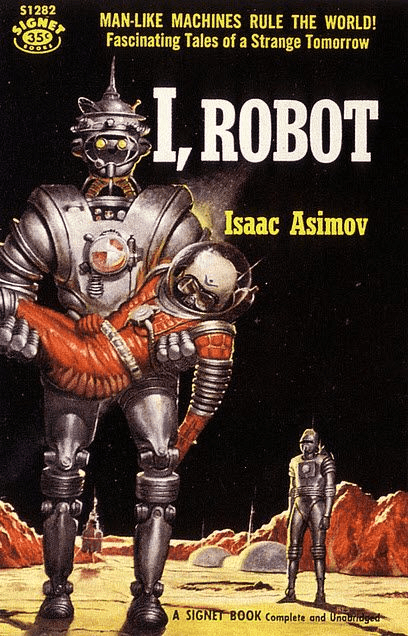
It’s more apparent in retrospect than it would have been in 1950 when I, Robot was compiled but “Liar!” is an important story in the Asimov canon. It’s the first time the idea of a robot with mental powers is discussed, an idea that becomes a pillar of Asimov’s later work, and the Oxford English Dictionary recognizes it as the earliest known use of the word “robotics.” more importantly though, “Liar!” is the first appearance of Susan Calvin, one of Asimov’s most consequential and well-known characters. She’s so central to the early robot stories that the framing sequence of I, Robot is written as a conversation between Calvin and a biographer. Through this conversation, she introduces each chapter. I, Robot is Susan Calvin’s story and the introduction tells us that “In 2008, she obtained her Ph.D. and joined United States Robots as a ‘robopsychologist’ becoming the first great practitioner of a new science.”
So, let’s look at the changes holistically. There appear to be three categories.
There seems to be one change to smooth out the prose, where “Mathematical Journal—” becomes “Transactions of the Far—.” This reads better because the partial title seems more believable for an academic journal.
There are several bookkeeping changes, namely the one removing “Tyrone and his demagogues” and all those updating the Three Laws of Robotics. These are exactly the kinds of edits one should expect in a fix-up like I, Robot. In any series of stories, details will never be completely determined initially. The book will feel more cohesive if small changes are made for the sake of consistency.
The changes that remain must be what Asimov was referring to when he wrote, “This story was originally rather clumsily done, largely because it dealt with the relationship between the sexes at a time when I had not yet had my first date with a young lady.”
I’m not sure that these edits hit that mark and I’m certain that they fall short of being significant.
Let’s recap these changes. We have:
Calvin doesn’t approach Herbie “with a friendly smile.”
Calvin describes Ashe’s girlfriend as “slim” rather than “slinky.”
Ashe refers to Calvin as a “lady” rather than a “dame.”
The removal of the sentence where Calvin feels self-conscious about changing her hair and wearing make-up, but that feeling disappears when she’s with him.
So, are women written better as a result of these edits? When Asimov wrote about “significant” changes, it is reasonable to expect something like a fundamentally different subplot for Susan Calvin. Her subplot still resolves around a cringeworthy mistaken impression. It depends on some unfortunate tropes, like Calvin changing her hair and makeup to attract Ashe and destroying Herbie in a fit of pique. That subplot remains “clumsy,” and Asimov’s treatment of female characters isn’t significantly better. For example, although Ashe’s unnamed girlfriend is no longer “slinky,” she remains unable to add two to two.
But the changes are likely more about Susan Calvin than writing women in general or making the story less clumsy. It’s disappointing to ponder “Liar!” as Calvin’s initial appearance because it means that Asimov had the silly unrequited love subplot in mind and Calvin was created because the subplot required a female character. But over the following nine years Calvin and the characters surrounding her became the centerpiece of Asimov’s robot stories; they turned into the brilliant, serious professionals who drove the plots and resolved the problems. These edits are just enough to make this story fit with the rest of the book but is it a consistent portrayal? Let’s look at the framing sequence. In the run-up to “Liar!” Calvin tells the biographer “I was foolish once, young man. Would you believe that?” “No,” he replied.
Resources
Asimov, Isaac. “Liar!” Astounding Science Fiction, May 1941, pp. 43-55.
As the Manimal threshold fades into the rear-view mirror, we reach our next milestone, with number 11, we now have as many episodes as Cop Rock! You know, it takes most shows years to get around to a musical episode, but those guys? Musical episode right out of the gate! Never fear, though; Stars End: The Musical is toward the end of our Thousand Year Plan.
Right now, please join us for Episode 11 – A Podcast Has No End.
And podcasts don’t, but books and trilogies do. We’re at the end of Second Foundation, and we talk about the very last story, “Search by the Foundation,” known as “…And Now You Don’t” when it was published in Astounding. We’ll meet Bayta Darell’s granddaughter, Arkady, and see a reveal of where the Second Foundation might be, followed by the reveal that there is no Second Foundation, followed by another reveal that the Second Foundation might be somewhere else, and then… well, you get the idea. Plus, we discuss the latest trailer and squeeze in one more round of Asimov Trivia before we start Season 2, coming soon to one of them WWWs near you!
With the Threll of the Las Vegas 55-Year Mission winding down and the excitement of the Apple TV+ Foundation series winding up, now is a perfect time to check out our Stars End Podcast! Whether you’re looking for a new decades-old franchise to enjoy, you want to catch up on some of your favorite old SF before enjoying the new teevee series, or if you’re just looking for something entertaining to listen to at the airport, Stars End can fill that need! We’re not even off-brand yet!
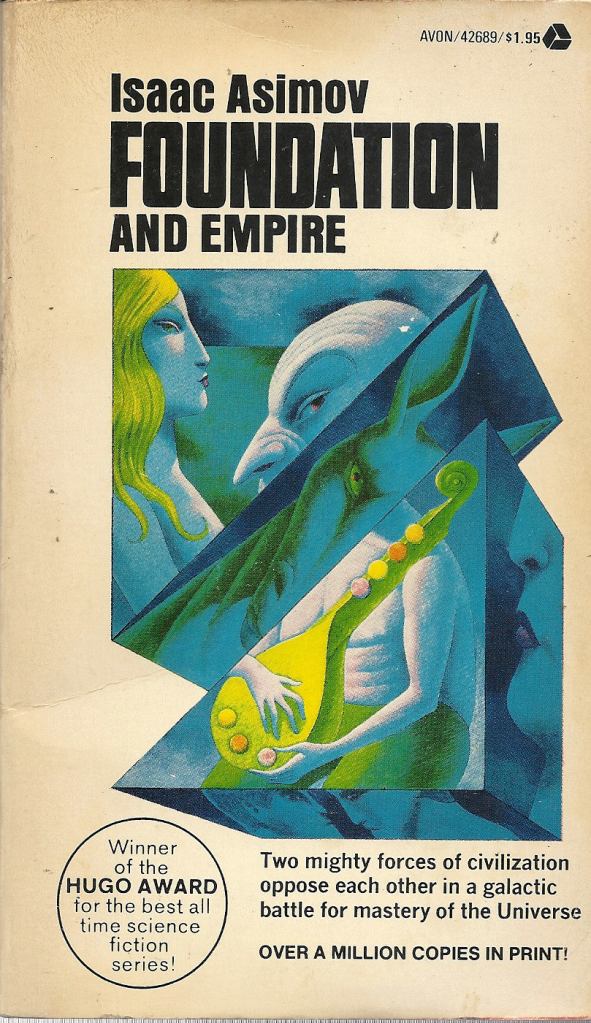
Please join us for Episode 9 – “A Podcast is Best and Most Effective When It Does Not Evaporate In Empty Phrases” as we wrap up Foundation and Empire with the resolution to Episode 8’s cliffhanger and learn the sooper-secret identity of the Mule. Will the Foundation persevere? Will the Mule conquer the Galaxy? What’s up with Bayta? And where the heck is the Second Foundation anyway? All will be revealed as long as it falls outside our rigidly defined areas of doubt and uncertainty. Thus we merely foreshadow Second Foundation which may or may not be about the location of Seldon’s Second Foundation.
Also “Asimov Trivia” and a new game: find the Douglas Adams reference in this very episode description! The first person to identify the reference and comments on it here or to @StarsEndPodcast on Twitter will receive what Stan Lee used to call a “No-Prize.” That’s not really anything, but we’ll mention your name here or something.
If you’re keeping up with the Stars End Podcast, Episode 8 has been out for about a week, and Episode 9’s release is imminent. In these two episodes, we discuss the entirety of “The Mule” as we know it from Foundation and Empire. If you’re reading along, of course, it’s pretty easy to find a copy of the book including on Archive.org.
If you want to read this story as it first appeared in Astounding Science Fiction, it appears in the November and December issues from 1945. Not-at-all coincidentally it’s broken up just as we did it on the podcast. The first installment covers the Foundation and Trader Worlds first learning about the Mule and then considering how to respond. It corresponds to Chapters 11 (Bride and Groom) through 18 (The Fall of the Foundation) and ends, as you might guess from the title, with quite a dramatic moment. The December installment covers the remainder of the story and completes the tale with a search for the Second Foundation. Asimov’s writing had gotten better here as evidenced by two nice touches; Mayor Indbur III on Terminus and Emperor Dagobert IX on Neotrantor are excellent personifications of their respective dominions.
As we’ve been seeing, Asimov changes very little from Astounding to the novels. As was the case with “The General” The obligatory Encyclopedia Galactica entry that serves as a prologue is absent, replaced in the first part, by this teaser, probably written by John W. Campbell.
First of two parts of Asimov’s first serial of the Foundation — and of the one factor that even Hari Sheldon could not predict — could not defend the Foundation against. The defenses were based on human psychology; The Mule was a mutant!
Unlike for “The General,” unfortunately, the layouts have largely reverted to rectangles and a lot of the images are tiny. We can hope they do a bit better in part two.
Once again there are some nice illustrations in both parts by Paul Orban. Unfortunately, the scans of these issues aren’t as clean as the previous installments have been so the image quality is uneven.
Second of two parts. Across the ruined, dying Galactic Empire , fleeing from a conquered Foundation, three frightened people and the hunted jester of the new conqueror, the Mule, sought the Second Foundation — the only hope, but it must be warned
That’s followed by a summary of part 1, which you can find here: Astounding Science Fiction, December 1945 if you’d like to read it. Paul Orban’s illustrations are below. They’re larger and more textured than the illustrations from Part 1.
















 Stars End: A Foundation Podcast