Next Time on Stars End

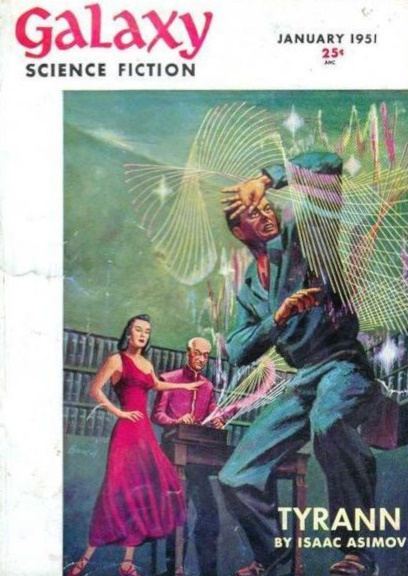
Galaxy SF, January 1951

Right now I’m listening to Magnets, the second album by the Vapors. Their initial outing, New Clear Days, most famous for the song “Turning Japanese,” remains one of my favorite albums. When I discovered New Clear Days, Magnets was already out of print. I literally spent years trying to track it down to no avail. Eventually, it reappeared with both albums packaged on one CD. At the time, it was a bit of a letdown. Today I’m finding it a much better listen than I remembered. The song “Linena” remains my favorite cut. Still, when I think about the “Second Album Curse,” I invariably think back to Magnets.

There’s a related notion in the publishing world, namely “Second Novel Syndrome.” The Stars, Like Dust — is the Good Doctor’s second novel. Did he escape the syndrome? Let’s save that for the podcast.

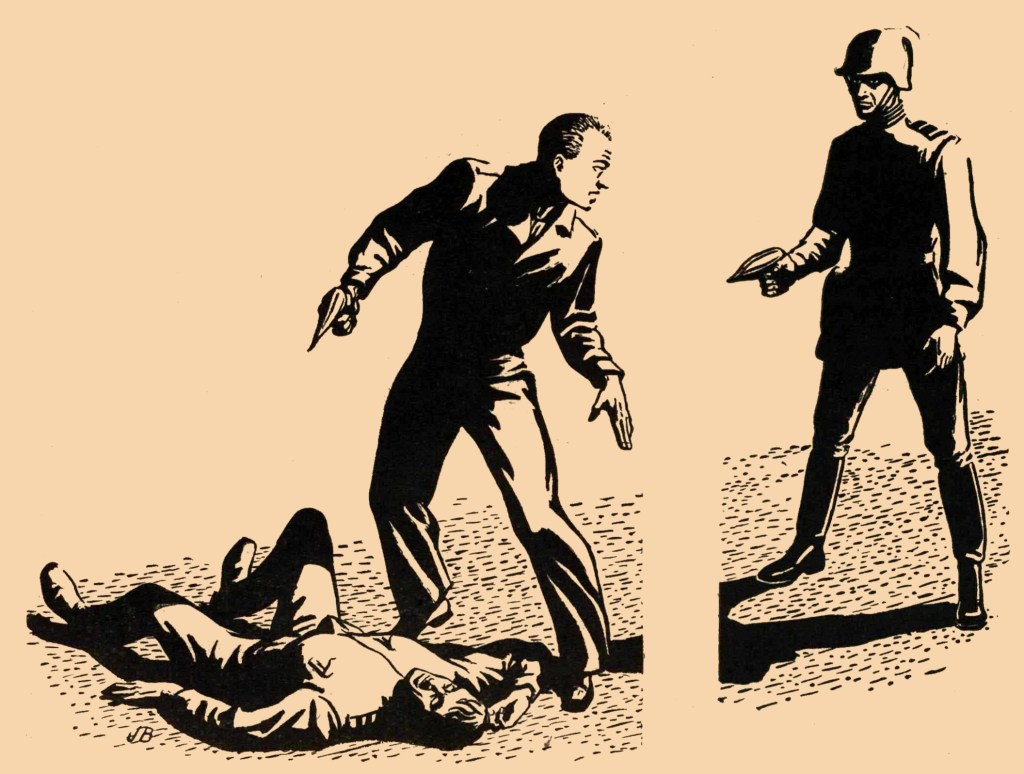
The Stars, Like Dust was written while Horace Gold was trying to get Galaxy Science Fiction off the ground and he was anxious to include something by an author as popular as Asimov. Dust was serialized in Galaxy under the title Tyrann, starting in January of 1951, with art by John Bunch. That’s only the fourth issue. Let’s take a look at the illustrations; which I’ve cleaned up a bit.

Four of the six images are spread across two pages including this title page. I’ve kept the text in place so you can see it in context.
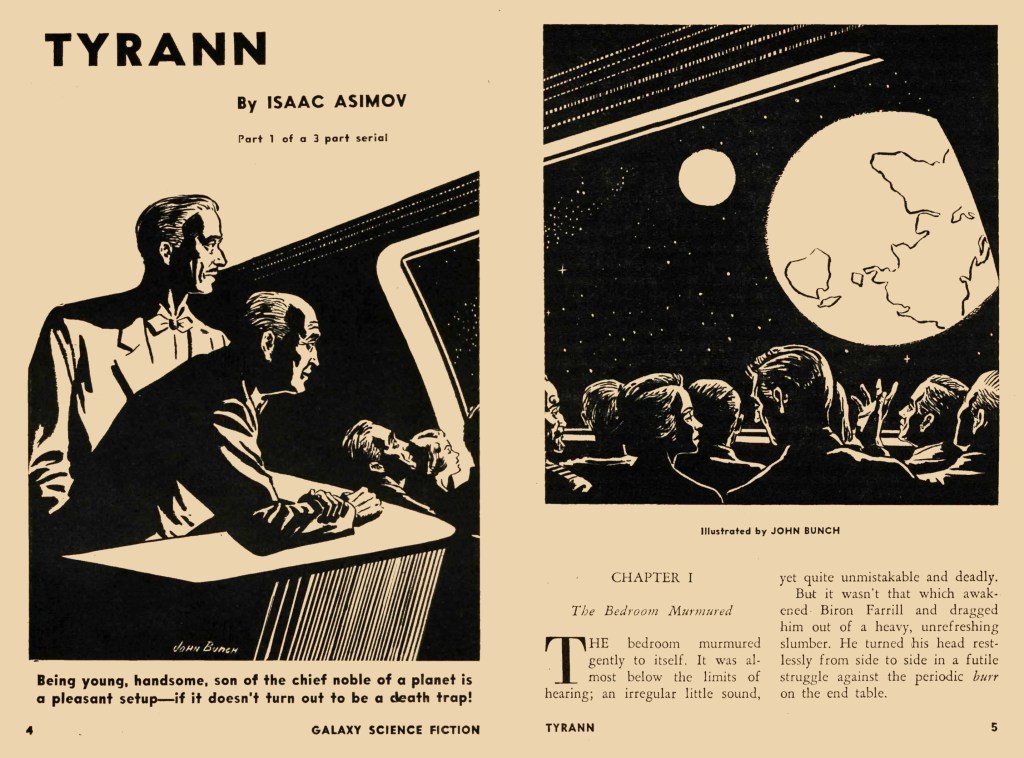
Without the text, I’m able to better align the two pieces.

One of the things that stands out in these illustrations is the extensive and effective use of solid black. Notice that Biron is entirely inside the negative space here.

This is one of the stand-alone images.

I’ve left the text here to highlight that this is an excellent use of layout. Biron feels both constrained and isolated, things highlighted by depicting him inside a cramped image, boxed in by the text.

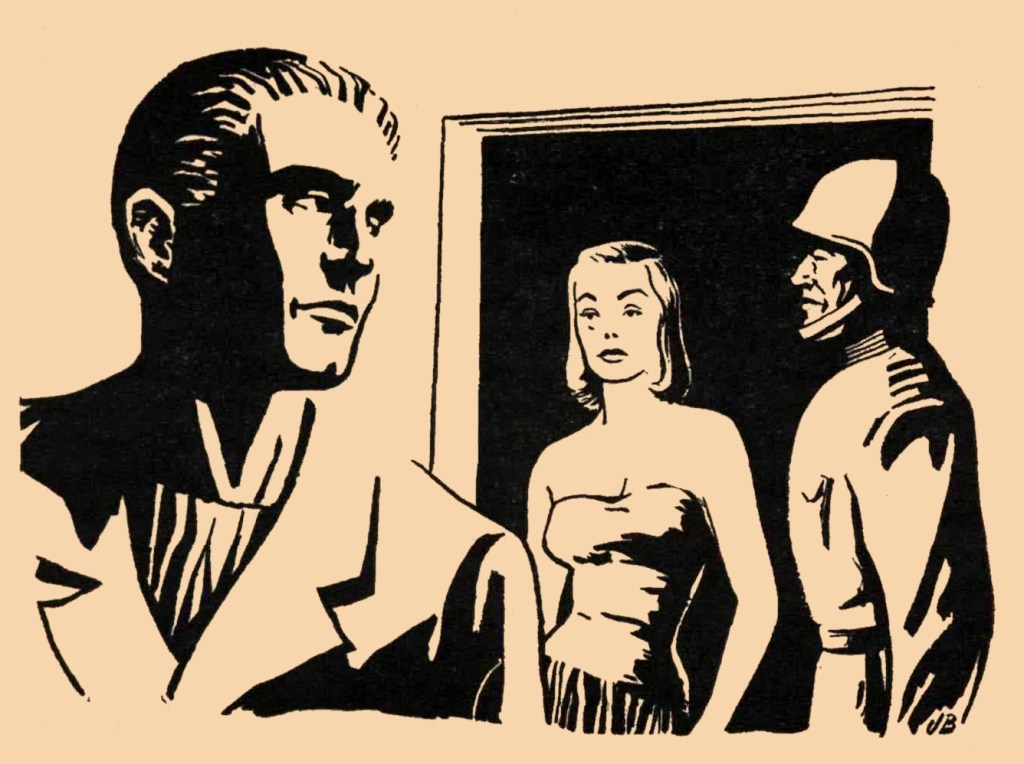
Another example of effective use of negative space; our attention, like Biron’s, is drawn to Artemisia.
We end with one more three-column, two-page image.
Look for Stars End, Season 5, Episode 17 this weekend! We’ll talk about chapters 1 through 8 of The Stars, Like Dust or, if you prefer, Part 1 of Tryann as published in the January 1951 issue of Galaxy Science Fiction.

Resources

Of Pebbles and Pulps

The cover of Galaxy Science Fiction Novel #14

Sometimes the world of science fiction publishing seems like the Wild, Wild West to me. I don’t mean the wacky 1960s teevee show. I probably don’t mean the real Wild, Wild West either because I suspect that was pretty brutal. What do I mean? The Wild West I mean is the one that I grew up with. It lived in shows like The Big Valley and the Star Trek episode “Specter of the Gun” with a little Firefly thrown in for good measure. It also lived in timeless classics like The Cheyenne Social Club. That’s the entire list, I wasn’t much of a Western guy. In fact, I only saw The Big Valley if I was home sick from school. Still, I mean chaotic and lawless in a mostly family-friendly sanitized PG kind of way.

Also, I realize that the inclusion of Firefly implies that I was still growing up when I was nearly forty. That tracks. On my last birthday, I entered my seventh childhood.

So my brain thinks that a novel comes out in hardcover and then some indeterminate time later the paperback edition follows. Mass market paperbacks were just getting started in the early 1950s and in SF publishing, although penny dreadfuls and dime novels were long gone, pulp magazines were still dominant. The other Galactic Empire novels were serialized in major pulp magazines as were the first two Robot Novels. But not Pebble in the Sky, its first paperback edition didn’t exist until 1957. What did we get instead? Two things.

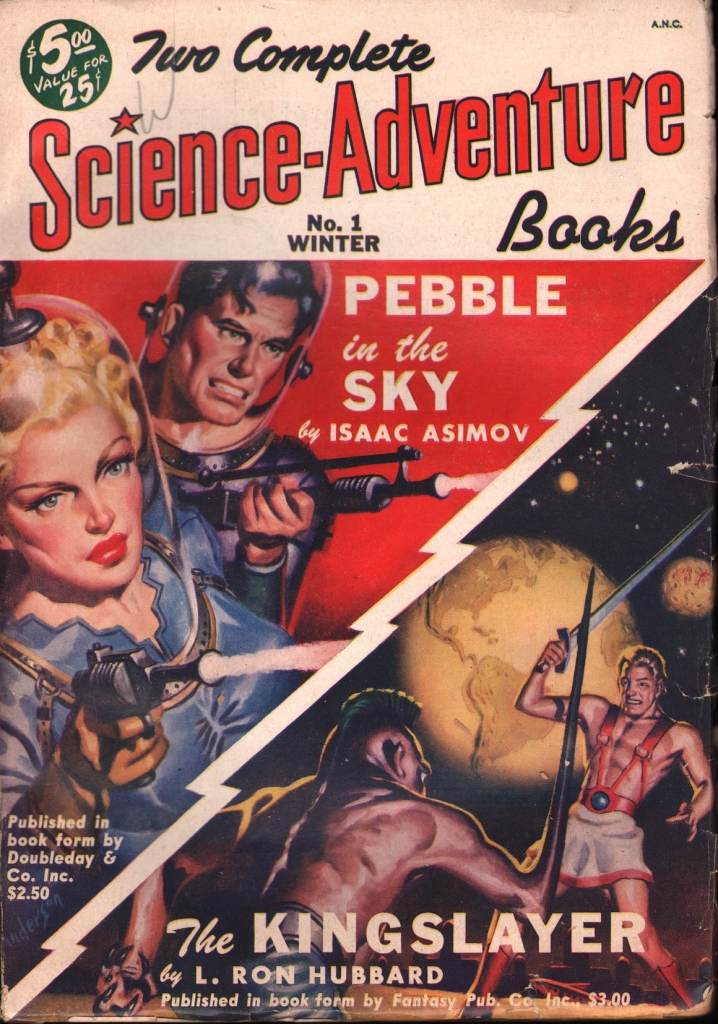
Taking the second thing first, in 1953, Pebble in the Sky was published as the 14th Galaxy Science Fiction Novel. These were reprinted novels that were published monthly in the same digest format as Galaxy Science Fiction. We get a nice new cover illustration, but these have no interior artwork. The Galaxy novel isn’t the inspiration for this post.

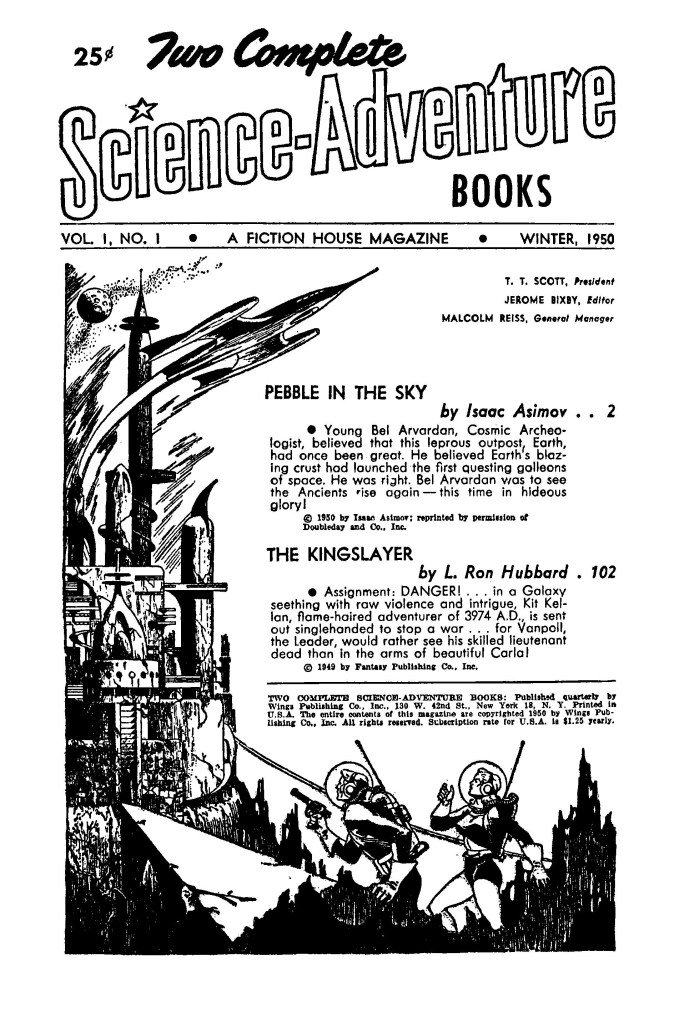
The first though arrived in late 1950. Pebble was also published in the first issue of Two Complete Science-Adventure Stories (2CS-AB). And this does have some interior artwork. It took me a while to track it down but I eventually found it at the Luminist Archives which, like Archive.org, is a treasure trove that includes a lot of Golden Age Science Fiction. Each of the two novels opens with an illustrated two-page spread. Here’s the one for Pebble.

The Opening Image for Pebble in the Sky in Two Complete Science-Adventure Stories.

The image from the contents page matches the cover image with the glass hats and the ray guns.

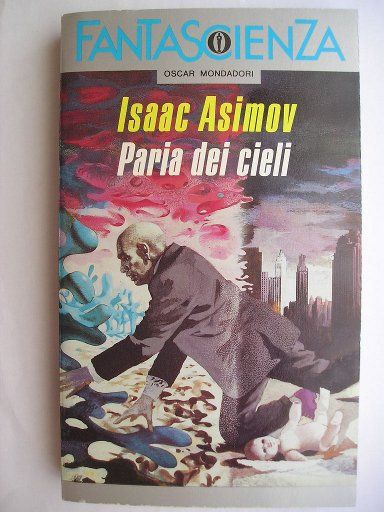
The cover of an Italian Languste version of Pebble in the Sky

This is, so far as I know, the only Pulp Art for Pebble in the Sky. if you know of some more, please let us know in the comments! I’ll leave you with one final image, from an Italian language edition of Pebble. Unlike the 2CS-AB images above it has a clear and relevant relation to the events from the novel.

Resources

Stars End S5E16

We encounter the back cover of the Good Doctor’s first actual book as we wrap up The Pebble in the Sky with chapters 14 through 22.

Cover of the Bantam Paperback edition of Pebble in the Sky (1957)

“Podcast Along With Me The Best is Yet to Be.”

If you’ve been around for a while you probably remember our discussions of the “Great Man Theory of History” vs the “Bottom-Up” paradigm. In other words, do remarkable individuals with unique characteristics write history or is it driven by powerful historical forces that generate great leaders when they are needed? It’s a false dichotomy, but a useful one. In the Foundation Universe the bottom-up theory must dominate otherwise psychohistory could not work the way it does.

But Joseph Schwartz is just the right Jewish tailor with a special kind of trick memory who is accidentally thrust to an exact moment in Earth’s future. Once there he is brought to the only scientist on Earth doing a particular type of brain research. He then survives a dangerous experiment that gives him an unlikely set of psychic powers which he uses to save the lives of nearly every human in the galaxy.

Put those numbers into your Prime Radiant and crunch them!

This probably delayed the creation of psychohistory by hundreds of years. “I just don’t understand it, Hari, the math says everyone in the galaxy should be dead right now.”

You’ll want to hear this! Let’s GO!

Stars End S5E15

Here’s your chance to join the discussion about Pebble in the Sky, Chapters 7 through 13! Also, we’ll open up the “Stars End Mailbag” and talk about Star Trek: Discovery!

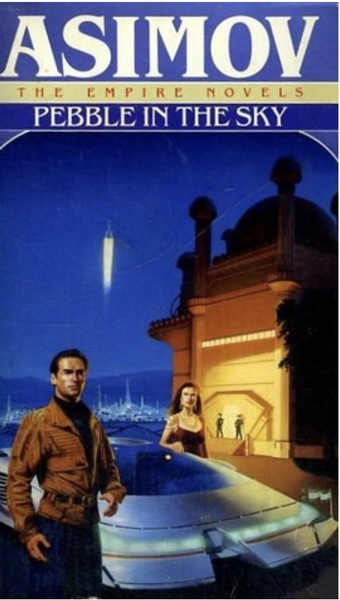
Cover of Pebble in the Sky, paperback ed. , circa 1992

“There is Only One Reason Why a Synapsifier Can Possibly Be Used – To Improve a Podcast”

A lot of us who are past the point where we would be culled by the 60 take supplements to, theoretically, help improve our memory. Just the other day I couldn’t remember the title of the Star Trek episode “Return to Tomorrow.” That was no fun. I think most of us would like to be at least a little smarter and maybe some of what would come from a device like the synapsifier could be helpful.

I’ll pass on the parts about being lost in the department store, wandering about the automat, or being driven mad by the thoughts of strangers though. Those don’t sound fun either. “Lost in the Supermarket” by the Clash might sum up all of these potential side effects.

It would though, improve a podcast, to a point. Remembering what we want to say would help quite a bit. And having perfect recall would save a lot of note-taking. But telepathic communications would ruin things even with state-of-the-art recording equipment unless an hour of silence would be an improvement.

In the meantime, we’ll muddle through and bring you the best podcast possible with regular human brains and imperfect memory! Let’s GO!

Stars End S5E14

We begin our conversation about Pebble in the Sky with Chapters 1 through 6.

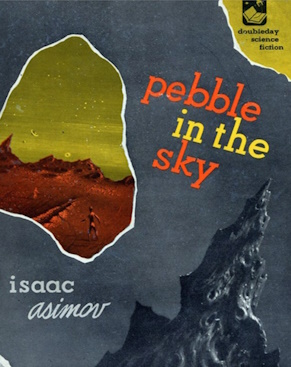
Pebble In The Sky First Edition Cover

“Between One Podcast and the Next.”

Isaac Asimov is famously prolific; if you know one thing about the Great and Glorious Az it might be that he wrote more than 500 books. Asimov-Reviews.net puts the number at 514 counting the Good Doctor’s dissertation. Asimov.Fandom.com puts the number at a much more modest 506.

The Back Cover of Opus 100. Asimov’s First 100 books.

Why is this relevant? Well, Pebble in the Sky is Asimov Book #001; it’s the first thing he wrote that got stuck between its own two covers (unless you count his dissertation, which he did not). It’s also only his first novel even though he had already been writing professionally for eleven years. Most of I, Robot and the Foundation Trilogy were in the rearview mirror; those quickly became books 002, 004, 006, and 009. Pebble in the Sky is also a lot of fun!

Don’t miss it as we delve into this significant moment in Asenion history! Let’s GO!

Stars End S5E13

In which we talk about “Cal” and “The Fun They Had” with special guest Rachel from the Menuscript Podcast.

“The Podcasts They Had”

“Cal” has been called “the last great Asimov short story” and it looks like it’s his very last robot story. Cal is a robot who learns how to write fiction and develops into an odd sort of Asimov avatar throughout the story.

“The Fun They Had,” is one of the Great and Glorious Az’s most reprinted works featuring a student thinking back to how great school must have been back in the long, long ago of the 20th century.

We’re joined by special guest Rachel Schwartzbard who has just started her own podcast, the Menuscript, which is excellent. She’ll talk about it in this episode. You don’t want to miss that; afterward, you’ll want to check out her podcast!

The stories and Rachel’s podcast can be found right here.

Let’s GO!

Image Credits:

  • Featured Image: The Featured Image was “Designed by Freepik” at <www.freepik.com>.

Next Time on Stars End

I like to try things I haven’t done before and, on Thursday I decided to make a serious attempt at learning some video editing skills. It’s still a work in progress because, as one of my professors in graduate school once said, “Everything takes longer than it does.” 9999 more videos and I’ll be an expert.

Meanwhile, Season 5, Episode 13 will be out tomorrow. In the meantime please enjoy this preview.

Once you do, you’ll want to follow these links!

Image Credits:

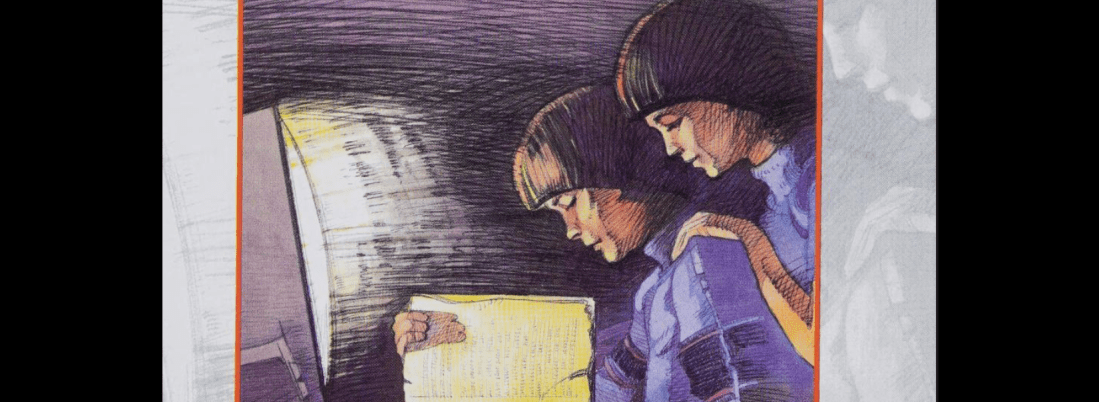
  • Featured Image: From “The Fun They Had” in Tomorrow’s TV, from the Raintree Reading Series 2, 1982 Fair Use